
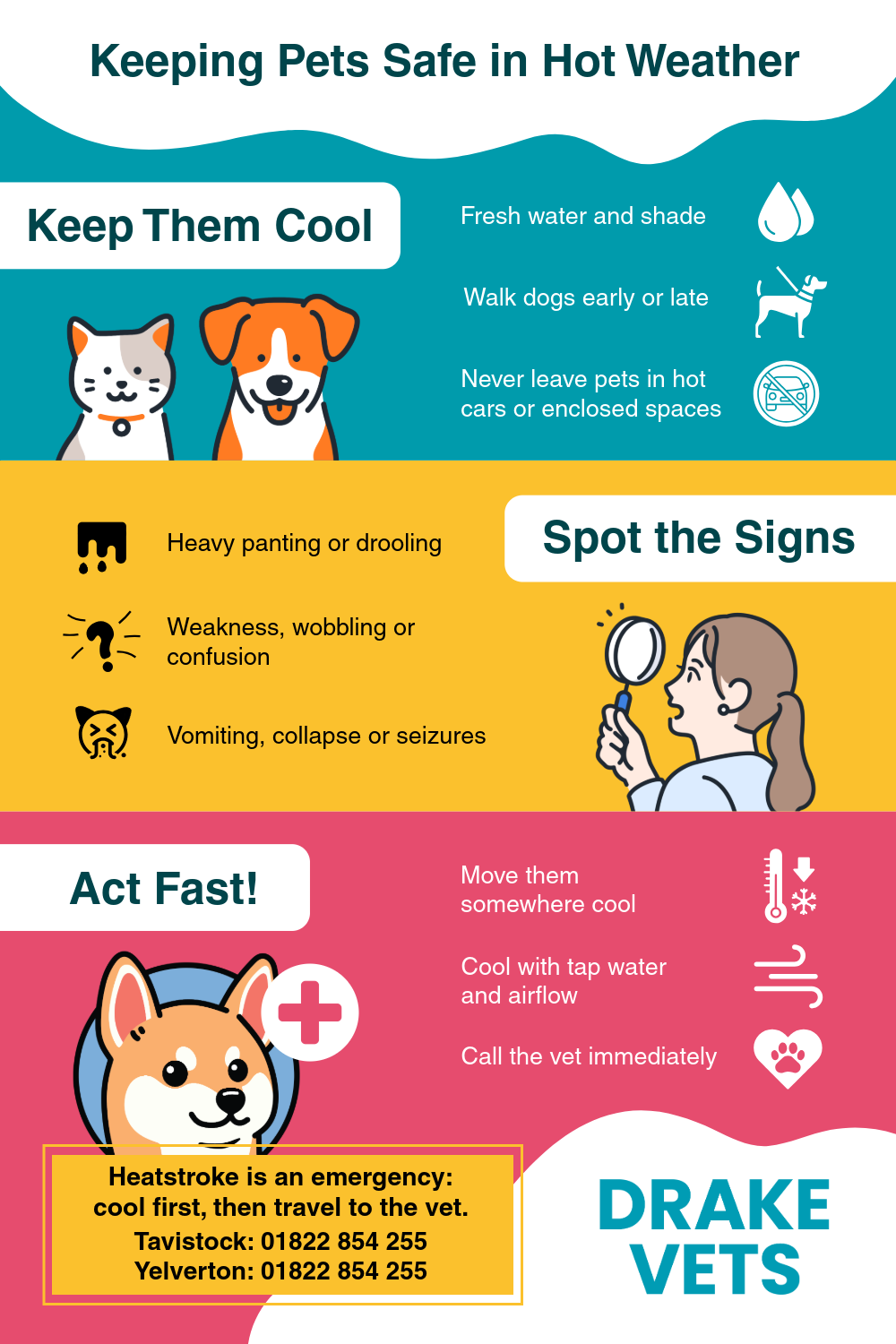
The infographic above covers the essentials at a glance. Below, we take a closer look at why hot weather can be dangerous, which pets are most vulnerable, how to adapt everyday routines and what to do if you suspect heatstroke.
Warm weather can be lovely, but even a mild-looking UK summer day can become uncomfortable or dangerous for pets. Dogs, cats, rabbits and small pets do not manage heat in the same way we do, and enclosed spaces can become dangerously hot far more quickly than many owners expect.
A few changes to your pet’s routine can greatly reduce the risk of overheating. It is also important to recognise the early signs of heat-related illness and know what to do if your pet begins to struggle.
Why Hot Weather Can Be Dangerous for Pets
Pets have limited ways to lose excess body heat. Dogs mainly cool themselves by panting, while cats may seek cooler surfaces, groom more and become less active. Rabbits and many small pets are especially vulnerable because they cope poorly with high temperatures and can quickly overheat in a warm hutch, cage, shed or room.
Heatstroke happens when a pet’s body temperature rises to a dangerous level and their normal cooling mechanisms can no longer cope. It can damage the brain and other organs, and it can be fatal.
Heat-related illness is not only linked to hot cars. Exercise is a major trigger in dogs, and cases can occur outside obvious heatwaves, particularly when pets are active in warm, humid or poorly ventilated conditions.
Which Pets Are Most at Risk?
Any pet can overheat, but some need extra care during warmer weather. Higher-risk pets include:
- Flat-faced dogs and cats, such as Bulldogs, Pugs, French Bulldogs and Persians
- Older pets and very young animals
- Pets that are overweight
- Pets with heart disease, breathing problems or reduced mobility
- Dogs with thick or double coats
- Highly active dogs that may continue playing or running despite becoming too hot
- Rabbits, guinea pigs and other small pets housed in direct sunlight or poorly ventilated spaces
These pets may need shorter periods outside, more frequent rest and closer monitoring, even when the weather does not feel extremely hot to you.
Simple Ways to Keep Pets Cool
Provide Water, Shade and Ventilation
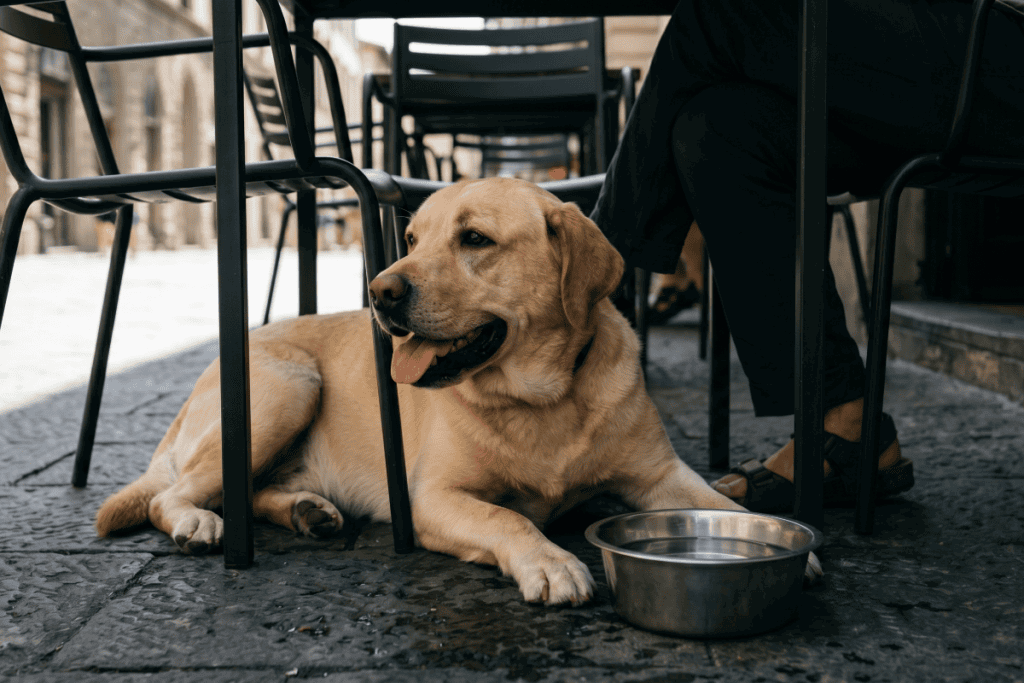
Make sure your pet always has access to fresh drinking water. On warmer days, place extra bowls around the home and garden in case one is knocked over or becomes warm.
Keep beds, cages and resting areas away from direct sunlight and choose the coolest, best-ventilated part of the home. Closing curtains or blinds on sunny windows can help prevent rooms from heating up.
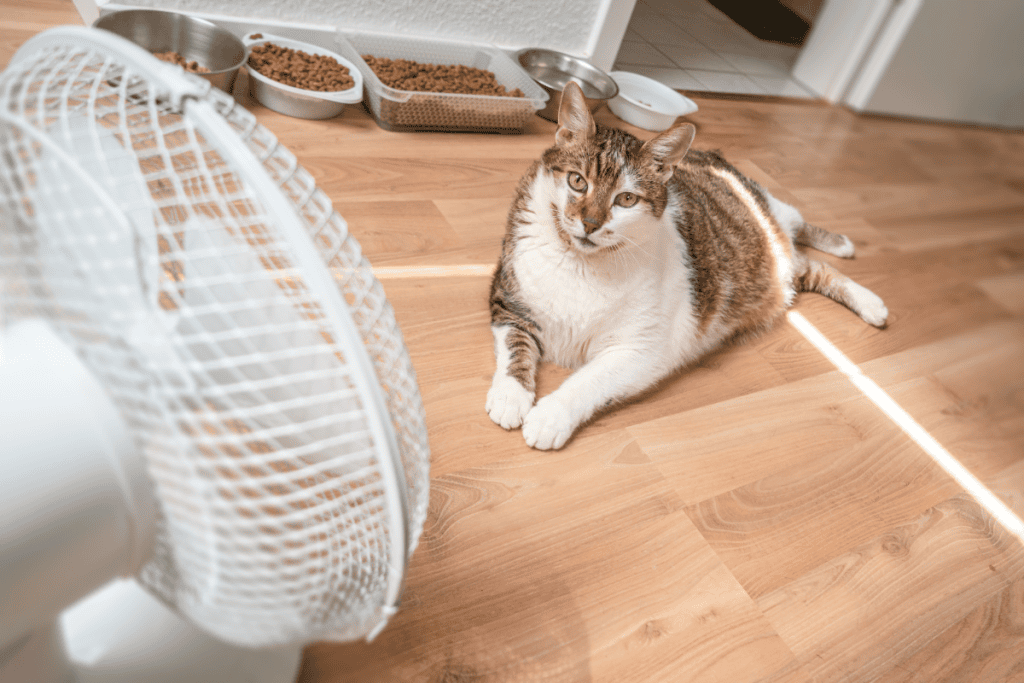
Fans may improve airflow, but pets should always be able to move away from them. Cooling mats, chilled ceramic tiles or a cool, damp surface can also provide relief.
Frozen water bottles wrapped in a towel can be placed beside, rather than directly against, a rabbit or guinea pig’s resting area.
Adjust Dog Walks and Exercise
Walk dogs during the coolest parts of the day, usually early in the morning or later in the evening. Keep walks shorter and gentler when it is warm, and choose shaded routes where possible.
Missing a walk or replacing it with calm indoor enrichment is safer than exercising in unsuitable heat. Food puzzles, scent games and short training sessions can provide mental stimulation without strenuous activity.
Pavements and artificial surfaces can become much hotter than the surrounding air and may burn paw pads. Check the ground before walking and avoid it when it feels uncomfortably hot to your hand.
Remember that energetic dogs may not choose to stop by themselves, so owners need to set the limit before their pet becomes exhausted or overheated.
Never Leave a Pet in a Hot Enclosed Space
Never leave a pet in a parked car on a warm day, even with the windows partly open or for only a few minutes. Cars can heat up rapidly and become dangerously hot.
Conservatories, caravans, sheds, greenhouses and poorly ventilated rooms can also become unsafe. Always check the temperature and ventilation before leaving a pet in an enclosed area.
Plan journeys carefully, use air conditioning where available and take regular breaks with access to fresh water.
Hot Weather Care for Cats
Cats often manage warm days by sleeping more and finding cooler places, but they still need support from their owners.
Provide several water bowls around the home and keep indoor areas ventilated. Some cats prefer running water, so a pet drinking fountain may encourage them to drink more.
Check sheds, garages, greenhouses and vehicles before closing doors, as cats may enter these spaces to explore or find somewhere quiet to sleep.
Pale or thinly furred cats can also be vulnerable to sunburn, particularly on the ear tips and nose. Ask your vet about a suitable pet-safe sun protection product rather than using human sunscreen, which may contain ingredients that are harmful if licked.
Panting or open-mouth breathing is unusual in cats and should be treated as a warning sign. Move your cat somewhere cool and contact your vet promptly.
Hot Weather Care for Rabbits and Small Pets
Rabbits, guinea pigs and other small pets can overheat quickly, particularly when housed outdoors.
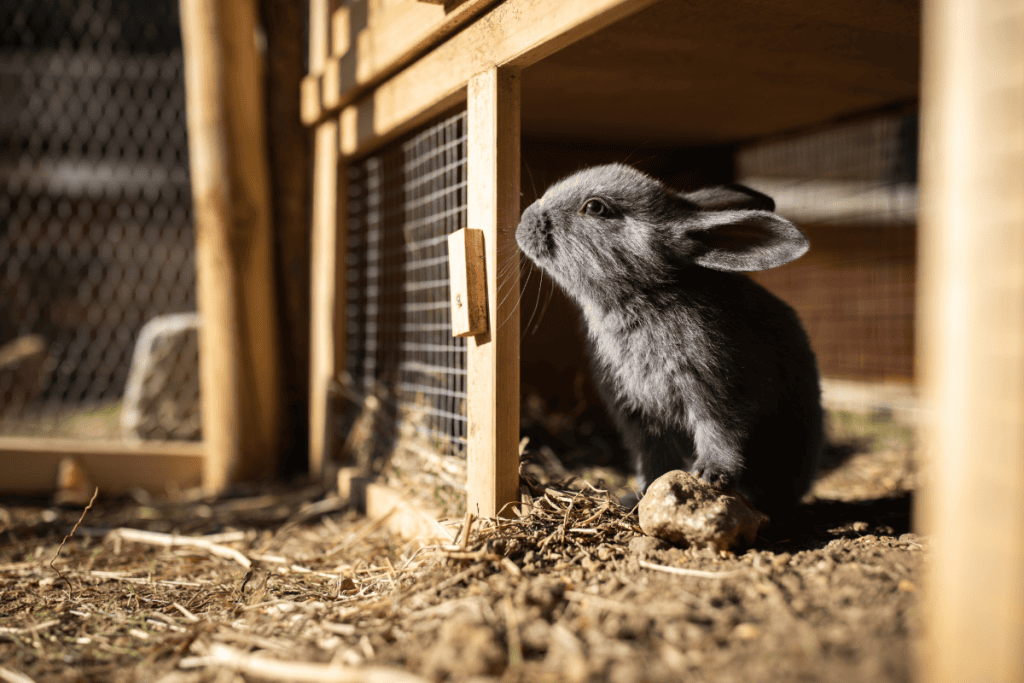
Move outdoor accommodation into permanent shade and remember that the position of the sun changes throughout the day. An area that is shaded in the morning may be in full sun by the afternoon.
Hutches and runs need good ventilation while still keeping pets secure from predators. Indoors, move cages away from sunny windows, radiators and warm electrical appliances.
Provide cool resting surfaces and consider placing a frozen water bottle wrapped in a towel beside their sleeping area. Replace it as it warms and make sure your pet can move away from it.
Check rabbits at least twice daily during warmer weather. Heat also increases the risk of flystrike, so keep bedding clean and regularly check the fur around your rabbit’s bottom.
Contact your vet promptly if you notice:
- Wet, dirty or matted fur around the bottom
- Wounds or sore skin
- Flies or maggots
- Reduced appetite
- Fewer or smaller droppings
- Weakness, rapid breathing or unusual quietness
A rabbit that has stopped eating or producing droppings needs urgent veterinary advice.
Signs Your Pet May Be Overheating
Early signs of overheating can progress quickly, so it is important to act as soon as something appears wrong.
Warning signs may include:
- Heavy, rapid or unusual panting
- Excessive drooling or a very wet mouth
- Restlessness or distress
- Repeatedly seeking shade or cool surfaces
- Bright red or unusually pale gums
- Weakness, drowsiness or poor coordination
- Vomiting or diarrhoea
- Confusion or reduced responsiveness
- Collapse or seizures
Cats may pant or breathe with an open mouth, which is always concerning.
Rabbits may breathe rapidly, have hot or reddened ears, appear weak, lie stretched out or become unusually quiet and unresponsive.
What to Do if You Think Your Pet Has Heatstroke
Heatstroke is a veterinary emergency. Begin cooling your pet immediately and contact the practice for urgent advice.
- Stop all activity. Move your pet into shade or a cool, well-ventilated area.
- Apply cool tap water to the body. The water does not need to be ice-cold. It simply needs to be cooler than your pet.
- Encourage airflow. Use a fan, air conditioning or natural airflow to support evaporation.
- Offer small amounts of water. Only do this if your pet is alert and able to drink normally. Do not force water into their mouth.
- Call the vet immediately. Arrange an urgent assessment and continue cooling your pet while preparing for transport.
Do not wrap an overheating pet in wet towels. Towels can quickly become warm and may trap heat against the body.
Do not delay veterinary care because your pet appears to improve. Internal complications can develop even after their breathing settles or their body temperature begins to fall.
A Little Preparation Makes a Big Difference
Check the weather forecast before walks, journeys or days out, and make a cooler alternative plan when necessary.
Keep fresh water available, create shaded resting areas and pay extra attention to pets with known risk factors. Make sure anyone caring for your pet also understands their routine and knows the warning signs of overheating.
Hot weather safety is not about stopping pets from enjoying summer. It is about adapting their routine so they can enjoy it safely and comfortably.
Worried About Your Pet in the Heat?
If your pet is struggling to breathe, appears weak, collapses or shows other signs of heatstroke, contact the practice immediately: Yelverton: 01822 854 255 / Tavistock: 01822 854 255
For non-urgent summer care advice, speak to our team. You can also ask us how the practice health plan can help you stay on top of routine preventative care throughout the year.